Friday, November 20, 2026

Preserve Family Story Assets: One Powerful Question

Preserve Family Story Assets Ask What Happened Before the Shutter Clicked

You can preserve family story assets by capturing what the camera missed.

Choose a photo someone remembers

Take one family photograph to someone who was there.

Ask one question

“What happened just before this was taken?”

Start with a face you recognise

Look for the photograph that makes you want to ring somebody. You probably already know which number you’d dial.

Ask one small question.

“What happened just before this was taken?” Then give the person time to look. The first thing they notice may be nowhere near the middle of the picture.
Imagine three sisters on the town hall steps after a wedding. The bride has her bouquet tucked against her waist. Her older sister is laughing, mouth wide open. The youngest has leaned in so close that her nose is nearly touching the bride’s veil. There’s a date on the back in blue biro, and somebody has written “our girls” underneath. You could spend a pleasant afternoon finding out which town hall it was, who made the dresses and where the reception was held. Yet the first thing a grandchild is likely to ask is the one thing the print can’t tell her. What’s so funny?

To preserve family story assets, choose the picture someone can still explain.
Preserve Family Story Assets: One Powerful Question

Suppose you show it to Aunt Jean, the sister on the left. Ask her for the date, and she might turn the photograph over to see what her mother wrote. Ask her who made the dresses, and she may give you the name of a woman who lived three streets away. Both answers have their place. 
But ask what happened just before the photographer pressed the button and she looks again at her little sister. “Our Elsie had just told us she was still wearing her slippers.” Now look again at the bride. Her expression hasn’t changed a bit. Yours probably has. That’s the sentence worth catching while Jean is sitting opposite you.
A biscuit tin full of photographs can make a modest job look enormous. There’s the school outing with no names, a studio portrait in a cardboard mount and half a dozen envelopes from the chemist. It’s tempting to tip the lot out and start with the oldest.
Try asking a different question before you clear the table. Which of these could someone explain to you this afternoon? If Jean is coming for tea, put the wedding photograph beside her cup.
The studio portrait can go back in its envelope. You’ve chosen a job you can finish, and you’ve given Jean something more inviting to do than identify forty faces while her tea goes cold.
TODAY’S QUICK WATCH
Watch Today’s Video
See today’s problem-solving lesson in action.


▶ Watch Video

Let her hold the photograph if she’s comfortable doing so. From across the table, you might be looking at the bride, while Jean’s thumb has stopped over a bit of coat sleeve at the edge. Follow her attention. “Who are you looking at there?” gives her room to tell you why that sleeve matters. Perhaps the person wearing the coat had spent the morning searching for a missing shoe. Perhaps she likes the buttons. Your job is to find out which. As soon as you suggest an explanation of your own, she has to deal with yours before she can get back to hers.

This is where the wording of the question earns its keep. “Was Elsie always the one getting into scrapes?” offers Jean a ready-made family character. She can agree, and you can both leave feeling you’ve learned something, even though neither of you has found out what happened on those steps.
“What do you remember hearing?” is a smaller invitation. It gives Jean room to say that she heard the remark herself, that her mother told her about it later, or that she can’t remember a word and was laughing because everyone else was. Each answer tells you something different about the photograph. Only one would justify putting Elsie’s words in quotation marks.

Preserve family story assets in the words people actually use

Imagine Jean’s grandson opening the finished page on his phone on the bus home. He can read every word, but there’s something nobody at your kitchen table thought to explain. He’s always known his grandmother as Nana. He has no idea that the young woman you’ve called Jean is her. You and your sister could read that caption a dozen times without spotting the difficulty because you’ve called her Jean all your lives. A small addition sorts it out: “Jean, on the left, later became Tom and Lucy’s nana.” Put that beside the picture and imagine Tom looking again. Now he knows whose laugh he’s looking at. The slippers story has landed in his own family.
Think, too, about the family member joining the conversation by telephone. If you’ve texted Jean a picture of an entire album page, the three sisters may appear on her screen about the size of postage stamps. She might say she can’t remember the occasion when what she really needs is a better look at the bride. Send the whole picture first so she can get her bearings. Then, if she mentions a particular face or a hand on someone’s shoulder, send a closer view of that part. Let her choose the detail. Otherwise, you may spend ten minutes enlarging Elsie’s shoes when what Jean wants to see is the woman watching from the town hall doorway.
Occasionally the person you ring will take one look and say, “You’ve got the wrong sister, love. You want our Margaret.” That’s a useful afternoon’s work already. Before ringing Margaret, ask Jean what made her think of her. Perhaps Margaret made the bridesmaids’ dresses or went back to the house to fetch something. Pass on the reason for your call without supplying the answer you’re hoping to hear. “Jean says you helped with the dresses. What do you remember about getting the girls ready?” leaves Margaret room to remember a broken zip, a borrowed brooch or nothing in particular. Starting with “Tell me about Elsie’s slippers” gives her somebody else’s story to carry before she’s had a chance to tell you her own.

Today’s Apprentice Task: Build One Front Door

Open to See This Video, And This Is What’s Already Built,
Trained & Waiting For Your First Command.

Preserve Family Story Assets Without Losing a Familiar Voice

There’s a small editorial decision to make if Margaret gives you a lovely account and you haven’t written a word of it down. By the time you fetch a pencil, you may remember the sense of what she said much better than the sentence itself. Write the sense plainly in your own words and put Margaret’s name beside it. Save quotation marks for the phrase you caught accurately. You can read the note back over the phone: “I’ve written that you sewed the brooch onto the dress because the clasp kept coming open. Have I understood you?” She can correct the detail there and then. If she says, “I sewed the clasp shut, pet. She’d never have got the dress off otherwise,” you’ve discovered a difference well worth the second call.
If you’d like to keep a little of Margaret’s voice, ask whether she’d enjoy recording that last bit for the family. Give her the picture again and let her decide where to begin. She may prefer to leave a short voice message after tea, when nobody is waiting for her to perform. When it arrives, listen to it alongside the photograph. Somebody opening those two things in years to come will need to know whose voice they’re hearing and which person in the picture she means. Add a plain line to the album page: “Margaret, who helped with the wedding clothes, remembers fastening the bride’s brooch.” Keep the written caption too. Tom can read it on the bus and play the recording to his children when he gets home.
There’s one last kindness you can do for the person who supplied the story. Send Jean the finished page. She lent you the photograph for an afternoon, answered your questions and let you use her words. She ought to get the pleasure of seeing what came of it. Send the same page your grandchildren will receive, with the photograph large enough to enjoy and the caption easy to read. If she rings back laughing about Elsie, let her laugh. You don’t need another interview. The point of the afternoon was to put a family photograph back into conversation. Now Jean has a copy she can take round to her sister’s, put on the table between them and say, “Do you remember that?”
Preserve Family Story Assets: One Powerful Question
SPREAD THE LOVE

Preserve Family Story Assets: One Powerful Question: Preserve family story assets with one old photo and one question. Capture what happened before the shutter clicked and keep the story in your relative's own words


#RetireeKnowledgeVaultSystem, #SaveYourFamilyAnswers, #QuestionsYourFamilyAsks, #RecordYourPracticalKnowhow, #CaptureEverydayFamilyWisdom, #PassOnUsefulAdvice, #TurnExperienceIntoLessons, #CreateReusableAnswerCards, #BuildYourKnowledgeVault, #SaveAnswersForLater, #ShareSkillsAfterRetirement, #PreserveYourWorkingKnowledge

Thursday, November 19, 2026

Sleep Quality Shapes Recovery And Recovery Why Sleep Quality

Sleep Quality Shapes Recovery Stiffness May Have Started the Night Before

Waking with a stiff neck, aching back or heavy shoulders doesn’t always mean you’ve done something wrong. Sleep Quality Shapes Recovery, but the way your body feels after a night in bed can tell a more complicated story than the number of hours you’ve slept.

Why Yesterday’s Sleep Quality Shapes Recovery May Disappear Overnight

Imagine waking on a perfectly ordinary Tuesday morning. You haven’t been digging the garden, lifting furniture or doing anything particularly strenuous. Yet your neck feels reluctant to turn, your shoulders seem unusually heavy, and your lower back needs encouragement before you can comfortably straighten up. Yesterday, you felt reasonably well. Today, you’re wondering why your body seems to have aged overnight.

Before You Blame the Mattress, Look for the Pattern

Your first thought might be that the mattress has become too soft, your pillow is getting old or you’ve simply reached an age when morning stiffness should be expected. Those explanations may sound reasonable, but none should automatically be accepted as the cause. Your body has spent several hours resting, perhaps with an already sensitive shoulder under pressure or your head supported at an uncomfortable angle. The useful question isn’t simply why you’re stiff. It’s whether you can recognise a connection between where the discomfort appears, how you’ve been resting and what happens when you begin moving.

Sleep is essential for physical recovery. During the night, the body carries out important processes involving tissue maintenance, immune activity and energy regulation. However, sleeping doesn’t mean every joint and muscle automatically becomes more comfortable. A person can obtain a reasonable night’s sleep and still wake with discomfort related to an existing condition, an awkward resting position or another factor that needs investigating. This is where Sleep Quality Shapes Recovery becomes a useful subject for anyone who wants to remain mobile and independent. The aim isn’t to guess what went wrong. It’s to become better at noticing what your body is telling you.

A Comfortable Sleep Quality Shapes Recovery Position Can Become Uncomfortable

Morning Stiffness And Recovery Why Sleep QualityThink about your favourite armchair. You settle into it after lunch, switch on the television and enjoy an afternoon programme. Everything feels comfortable. Your back is supported, your legs are relaxed, and there’s no particular reason to move. However, when you eventually stand, your knees may feel stiff or your lower back may take a few moments to settle. You haven’t necessarily injured yourself. You’ve simply spent a considerable period with certain joints in relatively fixed positions. Your first movements after sitting may feel different from those you make after walking around the house.

A similar situation can arise overnight, although sleeping bodies naturally change position. Some people remain on one side for considerable periods, while others move frequently. The amount of movement varies, and there isn’t one sleeping position that suits everybody. A shoulder that’s sensitive to pressure during the day may complain after you’ve been lying on it. A hip that’s already uncomfortable may influence which side you prefer. Meanwhile, a pillow that feels soft and luxurious when you settle down might compress enough to leave your neck poorly supported. None of these possibilities proves the cause of morning pain, but they provide reasonable things to consider.

Here’s a distinction worth remembering. A position that feels comfortable when you first settle down isn’t necessarily one that remains comfortable for several hours. This doesn’t mean you should force yourself to sleep in a particular posture or attempt to remain perfectly still. Human bodies are adaptable, and movement during sleep is normal. Instead, consider whether your bedding provides comfortable support without creating an obvious awkward position. Sleep Quality Shapes Recovery in a broad sense, but pillow height, existing joint sensitivity and the way you rest can all influence how you feel on waking.

What Your Evening Activities May Reveal Sleep Quality Shapes Recovery

TODAY’S QUICK WATCH
Watch Today’s Video
See today’s problem-solving lesson in action.


▶ Watch Video

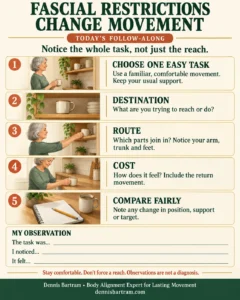
Consider somebody who spends much of the evening leaning forward to read, looking down at a tablet or sitting in one position while watching television. Their neck and shoulders may already feel tired by bedtime. If they subsequently fall asleep with their head sharply turned, they might wake with greater discomfort. It’s tempting to blame the entire problem on the pillow, but that ignores the fact that the muscles and joints may have been uncomfortable before sleep began. The evening and the night belong to the same story, even though one may be more noticeable than the other.

This matters because purchasing new bedding won’t necessarily change what happened during the previous evening. A more useful first step may be observing whether discomfort was already present before getting into bed. Did your shoulders feel tired? Was your neck uncomfortable when you turned towards the television? Had you been sitting without changing position for a long time? These details aren’t a diagnosis, but they help you avoid treating every morning symptom as a mysterious overnight event.

When Morning Stiffness Needs More Than a Pillow Adjustment

Some people wake stiff because they have been inactive for several hours. Others have health conditions that require diagnosis and treatment. Morning stiffness lasting more than about thirty minutes, especially when associated with joint swelling, can be a reason to contact your GP. The NHS advises medical assessment when joint pain repeatedly affects daily activities or sleep, becomes worse or keeps returning. Don’t assume a serious or persistent problem is simply an unfortunate consequence of getting older.

Seek urgent medical advice for severe symptoms or concerning combinations such as a hot, swollen joint with fever. New neurological symptoms, including significant weakness or numbness, also deserve prompt assessment. If symptoms are severe, sudden or accompanied by other emergency warning signs, obtain urgent help rather than continuing the observation exercise.

The value of Sleep Quality Shapes Recovery as a daily lesson is that it encourages curiosity without encouraging self-diagnosis. You can observe ordinary sensations and recognise patterns while still respecting the limits of what those observations can establish. The question isn’t whether you can work out every medical explanation from your bedroom. It’s whether you can make a better first decision instead of guessing.

Open to See This Video, And This Is What’s Already Built, Trained & Waiting For Your First Command.

Our Reader’s Task: Complete Your Morning Detective Check

For the next three mornings, provided your symptoms don’t require medical attention, make one brief record. Write down where you feel stiff, how you usually settled into bed and whether ordinary, comfortable movement changes the sensation. Keep the notes short enough to complete during breakfast. You don’t need a complicated chart, a numerical score or a special device.

At the end of the third morning, compare your answers. Have you noticed the same problem in the same place? Does a particular resting arrangement seem relevant? Does the stiffness consistently ease, remain or worsen with normal movement? If the same mild pattern appears repeatedly, you may have identified one safe comfort adjustment worth considering. If the symptoms persist, worsen or interfere with daily life, seek professional guidance.

The task is complete when you can explain three things in plain English: where the discomfort occurs, which resting arrangements might be relevant and what happens when you move normally. Those answers are useful even when they don’t point towards an obvious solution.

Remember the distinction that makes this whole exercise worthwhile: Morning stiffness tells you what you’re experiencing, not automatically what’s causing it.

Before you replace the mattress, blame your age or force yourself through uncomfortable stretches, ask one better question: “What pattern can I actually observe, and what’s the safest next step?”

And there’s one final thought. If your body was already uncomfortable before bedtime, the investigation may need to begin earlier in the evening, long before your head touches the pillow.

A Dennis Bartram movement-awareness lesson. This article is educational and isn’t a substitute for individual medical diagnosis or treatment.

Morning Stiffness And Recovery Why Sleep Quality
Spread the love

Sleep Quality Shapes Recovery And Recovery Why Sleep Quality

#SleepQualityShapesRecovery, #MorningStiffnessAfterSleeping, #WhyMorningStiffnessHappens, #SleepingPositionsAffectComfort, #PillowSupportDuringSleep, #GentleMovementAfterWaking, #RecogniseMorningDiscomfortPatterns, #BetterSleepBetterMovement, #OvernightRestingPositionClues, #OlderAdultsMorningMobility, #NeckStiffnessSleepPatterns, #ThreeMorningObservationMethod

Retiree Knowledge Vault System: One Powerful Question

Retiree Knowledge Vault System Question: They Ring You About What Belongs in Your Vault

Start a Retiree Knowledge Vault System With The Last Person Who Rang.

By the time the kettle boils, you can have the first entry in your Retiree Knowledge Vault System. Think of the last person who rang to ask how you’d do something. Write their question at the top of a page. Underneath, put the answer you gave them. If you had to ask them something before you could answer, put that in too. That little exchange can hold more of your working knowledge than an afternoon spent trying to write down everything you know.

What Did They Need To Decide?

Picture a daughter ringing her dad from the garden centre. “How many seed potatoes do I need for one row?” She’s got a bag in her hand and a second one within reach. She wants to know whether to put it in the trolley.

What Would You Ask Back?

“How long’s your row?” There’s a pause. In her mind, a row was a perfectly good measure until he asked. In his mind, it’s the first thing he’d want to know before spending her money.
Imagine asking that same dad over Sunday lunch if he’s got anything worth putting in a guide. He might tell you there’s a better gardener three doors down. Ask him what his daughter ought to do about the potatoes and the answer comes easily. He’d tell her to check the planting distance on the packet, measure the space she’s actually got and work out how many planting spots it gives her. She can do that for a short row this spring and a longer one next year. If he’d just said “buy two bags”, she’d still need to ring him next time.
That’s the bit worth keeping. It’s easy to remember the subject of a conversation and lose the decision that made somebody pick up the phone. An entry called “Potatoes” could take a fortnight to write. You could find yourself looking up varieties, making notes about soil and wondering whether to start with a history of the allotments. Meanwhile, there’s a woman by the till who still doesn’t know what to buy. Put her actual question at the top, and you can tell, sentence by sentence, which details belong. The useful answer ends when she knows what to do about that second bag.

What Earns a Place in Your Retiree Knowledge Vault System?

Retiree Knowledge Vault System One Powerful QuestionRetirement can take away the place where people used to ask you things. In the office, someone leaned round the door. On a job, the apprentice handed you the piece that wouldn’t fit. At home, a neighbour might catch you putting the bins out. None of those conversations come with a label saying “experience worth preserving”. You recognise one afterwards by the moment the other person could carry on. What were they about to buy, try, leave out or do twice? If you can remember that much, you’ve got somewhere more useful to begin than a blank page headed “My career”.
Take someone who used to organise a bowls-club tea. An invitation to write about club catering might bring back a dozen seasons of sandwiches and a strong desire to talk about something else.
TODAY’S QUICK WATCH
Watch Today’s Video
See today’s problem-solving lesson in action.


▶ Watch Video

Then a new volunteer rings. “How did you tell which flask was decaf once the lids were off?” That’s a question with a tight little boundary round it. Perhaps the former volunteer used to label the body of each flask before filling it, after once seeing two lids switch places on the draining board. One sentence about the labels and one about the lids would save the newcomer from discovering the snag halfway through tea. A menu for forty would leave them hunting for the answer.

Notice what the caller has done for you. They’ve chosen a subject, supplied ordinary words for the title, and pointed to the precise moment when your experience is useful. They’ve also given you a sensible limit on what to claim. One call tells you that one person wanted help with this particular job. It gives you a reason to keep the answer. Whether a club secretary somewhere else would want a whole handbook is a question for another day. You can make a perfectly sound first entry without trying to settle the future of a publishing business over a flask of coffee.

Keep The Question In The Words You’d Recognise

Suppose our retired tea organiser takes her note down to the bowls club on a quiet Wednesday. She’s written, “Label the flasks before you fill them.” The new volunteer takes a sticker from the drawer and presses it onto a lid. She’s followed the instruction as she understands it. If the organiser reaches across and moves the sticker herself, the immediate job gets done, but the next volunteer will inherit the same puzzle. Better to reach for a pencil and change the sentence there and then. “Put the decaf label on the body of the flask before you fill it. The lids can get swapped at the sink.” Now the reason travels with the instruction.
Notice how little of the old organiser’s life she has needed to write down. She hasn’t had to recall the year she took over, how many matches she catered for or who bought the urn. Yet the sentence about the sink contains something a photograph of the finished tea table could never tell you. She knows what happens after the visitors have gone home and somebody carries a handful of lids to the draining board. If you’re wondering what you could contribute after retirement, listen for the explanation that begins, “You’ll see why when you come to wash up.” There may be thirty years of Saturdays behind it.
There’s another useful decision she can make while she’s at the club. The volunteer wants to know where the spare labels are kept. Should that go in the note? On the copy kept beside the club flasks, certainly. “Top drawer under the tea towels” could save a search just before a match. On a sheet intended for other clubs, the same sentence would send strangers looking in the wrong drawer. She could give them a line to fill in: “We keep spare labels ______.” One detail belongs to this kitchen. The other helps a reader make the sheet work in theirs. That’s how a private reminder begins to earn its place as something you could offer to somebody else.

Today’s Apprentice Task: Build One Front Door

Open to See This Video, And This Is What’s Already Built,
Trained & Waiting For Your First Command.

What could one page from your Retiree Knowledge Vault System become?

Before spending an afternoon turning an entry into a PDF, decide who would take a copy and where they’d put it. The tea organiser has an unusually clear answer. A new volunteer could keep the page with the rota and take it into the kitchen on match day. That tells her quite a lot about the design. The print needs to be readable at arm’s length. The instruction about the labels belongs near the top, before anyone fills a flask. A photograph would earn its space if it showed which cupboard held the supplies. A picture of six smiling people drinking tea would use up much the same space and leave the volunteer opening cupboards.
You can test interest without building a whole guide. Try offering the single page in the words its reader would use. “Would a copy of the match-tea sheet help when you’re on duty next Saturday?” gives someone a job and a date to think about. Listen to the reply. “That’s lovely” tells you they appreciate the offer. “Could you leave one in the kitchen for Jean as well?” tells you where a second copy might actually be used. Neither answer establishes a selling price. Both are worth hearing before you decide whether to produce a printable pack, give a copy to your club or keep the entry for the next person who rings.
Give the page one final read with its destination in mind. A note in your desk drawer can say “ring our Jean”. A sheet pinned in the clubhouse needs an agreed contact and a way to keep that detail current. A printable for other clubs can leave room for their own contact. You can keep the original in your Retiree Knowledge Vault System and name the shared copy so it’s clear where it belongs, such as “Match tea instructions for the kitchen”. The next time a volunteer asks a question, you’ll know which copy to improve. More importantly, the person standing there on Saturday will know what to do while the tea is still hot.
Retiree Knowledge Vault System: One Powerful Question

Retiree Knowledge Vault System: One Powerful Question: Start a Retiree Knowledge Vault System with a question someone rang to ask. Save your answer, try it with a second reader and turn it into a useful page.

#RetireeKnowledgeVaultSystem, #SaveYourFamilyAnswers, #QuestionsYourFamilyAsks, #RecordYourPracticalKnowhow, #CaptureEverydayFamilyWisdom, #PassOnUsefulAdvice, #TurnExperienceIntoLessons, #CreateReusableAnswerCards, #BuildYourKnowledgeVault, #SaveAnswersForLater, #ShareSkillsAfterRetirement, #PreserveYourWorkingKnowledge

Wednesday, November 18, 2026

Life Lessons Worth Preserving: 3 Powerful Discoveries

Life Lessons Worth Preserving Start With Something You Remember

Think of something you learned at work or in daily life that could help someone avoid a mistake.

You Don’t Need An Extraordinary Life To Have Something Worth Sharing

The helpful part might be in a task you did often, a problem you fixed, or a question people asked you more than once.

Leave With One Experience Written Down And Ready To Develop

Pick one event, say what you learned from it, and write a short note you can look back on later.

Section One: You May Be Overlooking The Part Someone Else Needs

An old notebook might not seem important until you see your own handwriting. Suddenly, a few words remind you of a job, a place, or someone you worked with long ago. You remember what went wrong, who noticed it, and how you fixed it. These simple reminders are often where Life Lessons Worth Preserving begin. The key is to look past the memory and find what someone else could use. You don’t need to write your life story or act like every experience is special. Just pick one event today and figure out what it taught you. By the end, you should have a short note about what happened, what you decided, and the advice you would give someone in the same spot. That is a good place to start.
Maybe you kept things organised when your club went on trips. You knew it wasn’t enough to tell everyone to arrive at nine if they didn’t know which door to use. Or you helped a new colleague settle in and saw they felt awkward asking the same thing twice. You might have started writing down what a customer wanted because a friendly chat could leave people with different ideas about the job. These seem like small things in hindsight, but at the time, they could mean missing the bus, making a mistake, or having a disagreement. Someone new to the situation might find your explanation helpful. Start with something you know well and can explain.

Life Lessons Worth Preserving Can Hide In Routine Work

Life Lessons Worth Preserving: 3 Powerful DiscoveriesImagine Phillip sorting a drawer of papers from his years helping to organise a local club. This is a fictional example, but the contents will sound familiar: old lists, telephone numbers, meeting notes and instructions that meant something at the time. 
Among them is a sheet headed “Before You Book”. Underneath are questions about numbers, transport, access and cancellation arrangements. Wilson asks why Phillip kept it. “Because we once booked before we’d asked half the questions,” he replies. There is a story behind the sheet, but there is also a lesson about the order in which decisions were made.
 Phillip doesn’t need to recreate every detail of the outing. He needs to explain which question should have been asked earlier and what difference the answer would have made.
TODAY’S QUICK WATCH
Watch Today’s Video
See today’s problem-solving lesson in action.


▶ Watch Video

This difference matters when you have lots of memories but aren’t sure what to write down. A good story might say who was there, what the weather was like, and how people reacted. But a teaching note should explain why you made a choice. For Phillip, the main thing was that some people could only come if suitable transport were available. Counting people before sorting out transport gave him the wrong number. When you look for Life Lessons Worth Preserving, you will see that many start with a question you now ask without thinking. What do we need to know first? Who should we ask? What are we guessing? Your answer might seem obvious because you learned it the hard way. Someone new might not know it yet.

The First Discovery: What You Noticed

AI can help sort your rough notes, but give it the facts first. Tell it to keep your words where they work, spot missing details and not add things that did not happen. If you are collecting Life Lessons Worth Preserving, a made-up detail can change the story. Check the result against your own note and cut anything you cannot explain. The prompt below helps with this. Once you have a good teaching note, Building Your First Guide can help you see how it fits into a small resource. You will start with a real lesson, not ask the technology to create expertise for you.

Today’s Apprentice Task: Build One Front Door

Open to See This Video, And This Is What’s Already Built,
Trained & Waiting For Your First Command.

Today’s Apprentice Task: Save One Life Lessons Worth Preserving Someone Else Could Use

Pick one incident and write your five-part note. Say what happened, what was hard, what you noticed, what you did and what someone else can learn. Add one clear instruction and mark any detail you still need to check. Give the note a title you will understand later, like “Confirm transport before counting attendance”. Save it somewhere safe, and make a second copy if this is your only record. Life Lessons Worth Preserving do not have to be finished articles today. Your job is to make one honest, clear teaching note. If someone can read it, ask them to find the advice. If not, keep that check for later. Now the memory is saved, and you have something real to build on.
Riley’s thought: “Someone else may still be learning the lesson you now take for granted.
Life Lessons Worth Preserving: 3 Powerful Discoveries

Life Lessons Worth Preserving: 3 Powerful Discoveries: Find Life Lessons Worth Preserving in everyday experience. Capture one incident, explain what it taught you and create a practical teaching note.

#LifeLessonsWorthPreserving, #RecordYourPracticalKnowledge, #CaptureOneTeachingMoment, #ShareWhatExperienceTaught, #TurnMemoriesIntoLessons, #ExplainYourEverydayDecisions, #FindLessonsInMistakes, #PreserveYourWorkingKnowledge, #WriteYourTeachingNotes, #HelpSomeoneAvoidMistakes, #TeachFromPersonalExperience, #MakeYourKnowledgeAccessible

Monday, November 16, 2026

Share Your Finished Resource: Unlock Hidden Opportunities

Share Your Finished Resource: Find Interested Readers The Little Guide Nobody Knew Existed

Share Your Finished Resource Without Chasing Followers

Learn why finding a handful of genuinely interested people may teach you more than attracting thousands who never needed your information.

Turn One Useful Guide Into A Reader Conversation

Use the Right Reader Route to choose an audience, explain the benefit and give people a sensible reason to visit your website.
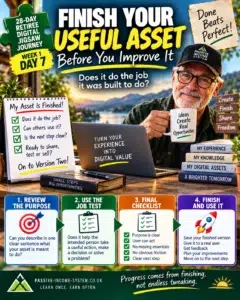
A finished resource needs somebody who can use it Imagine a retired gardener spending an enjoyable afternoon turning forty years of experience into a beautifully organised seedling checklist. He has checked the instructions, corrected the spelling and saved the finished document on his computer. It looks professional enough to print and hand to somebody starting their first vegetable garden. He sits back, pleased with the result, and waits for something to happen. A week passes. Nobody asks about the checklist. There are no encouraging messages, no visitors requesting further information and certainly no unexpected sales. The problem is not necessarily the quality of his work. Nobody knows it exists. Share Your Finished Resource is the natural next lesson after creating something worthwhile. A useful document sitting unseen on a computer has potential, but it cannot help another person until somebody has a reasonable opportunity to discover it.
Share Your Finished Resource: Unlock Hidden OpportunitiesThis is where many beginners become uncomfortable. Creating something from familiar experience feels manageable because they understand the subject. Sharing it with strangers introduces unfamiliar questions. Where should the document appear? Should it go on Facebook, YouTube or a website? Will people think they are showing off? Must they pay for advertising? What happens if somebody criticises the result? These concerns can turn a pleasant creative project into a frightening marketing exercise. Yet there is a simpler starting point. You do not have to announce the birth of a business empire or persuade hundreds of strangers to buy something.


▶ Watch Today’s Video

You can begin by identifying one group of people who experience the problem your resource addresses. Then offer one useful explanation and an invitation to learn more. That is the beginning of distribution, and it is much less complicated than the sales language often makes it sound.

Share Your Finished Resource By Finding One Real Problem

Phillip, our retired gardener, has completed the seedling checklist introduced in yesterday’s workshop. He created it because inexperienced neighbours kept asking similar questions about preparing pots, choosing a suitable position and looking after young plants. He could now place a link on every social account he owns and hope somebody notices. However, that approach ignores the most valuable information he already possesses. He knows which difficulty prompted the resource. His intended readers are beginners preparing seedlings, not everybody who happens to enjoy photographs of attractive gardens. Before posting anything, Phillip writes down the question he wants his checklist to answer: “What should I prepare before starting my first seedlings?” That question gives him a more useful starting point than the broad instruction to promote his website.
Now consider where people might naturally ask that question. A local gardening group may discuss the difficulties beginners experience. A community noticeboard might contain requests for simple seasonal advice. Friends who have recently acquired a garden may appreciate a practical checklist. Phillip does not need to approach every possible audience. He should first inspect one suitable place, understand its rules and observe what people are actually discussing. Some groups restrict promotional links, while others welcome genuinely useful educational contributions. Respecting those boundaries is essential. Share Your Finished Resource where the information fits an existing conversation, not wherever a platform permits another advertisement. When the audience and problem match, Phillip can begin with useful guidance rather than an elaborate sales pitch.

Share Your Finished Resource Before Trying To Sell It

Naturally, some creators will eventually want their resources to produce income. A checklist that helps a particular group solve a recurring problem may lead to ideas for a more detailed guide, a collection of templates or a practical workshop. But distribution and selling are separate decisions. A person who downloads a free worksheet has not agreed to buy a larger product. A friendly comment does not prove demand, and a popular video does not guarantee commercial success. Before creating a paid offer, examine whether the same problem appears repeatedly, whether the audience values the resource and whether there is a reasonable reason to offer something more substantial. This approach may reveal an opportunity, but it may equally show that the original free material already meets the need.
If you later recommend a paid tool or affiliate product, explain what it does, what it costs and why it suits the particular task. Disclose relevant affiliate relationships clearly. Do not suggest that readers must purchase another subscription to complete a job that can be done using tools they already have. For somebody working with a modest retirement budget, avoiding unnecessary expenses is part of the benefit. Share Your Finished Resource to establish usefulness first. An honest demonstration of what somebody can accomplish may build more confidence than a polished sales presentation promising effortless results. Commercial relationships worth keeping begin with realistic expectations and a genuine respect for the people who place their trust in your guidance.

Make The Next Door Worth Opening

A useful article should not become a dead end, but neither should the reader be forced into a complicated learning journey. Once somebody has completed a checklist, the next relevant lesson might explain how to improve its layout, discover whether others need it or prepare a short demonstration. That is the purpose of our Eight-Window Workshop approach: each article should make sense on its own while offering a clear next step. The connection must follow the reader’s interest rather than the website owner’s desire to promote every available page. A beginner who has just created a document may not want to learn about affiliate marketing immediately. They might first need to discover how to save, share or explain the finished item.
Our free twelve-prompt guide provides another opportunity to make that progression understandable. A reader can select one prompt, use their own knowledge to produce something useful and inspect the result. The next lesson shows how to introduce that work to an interested audience. Later teaching can explore feedback, presentation and realistic commercial possibilities. Each stage builds on a practical achievement without suggesting that everyone must follow the same route or achieve the same outcome. Share Your Finished Resource when the information is ready, and the reader’s likely need is clear. The right invitation helps the person decide whether continuing would genuinely benefit them. That is a stronger foundation for a lasting educational website than another collection of unrelated links.

Open to See This Video, And This Is What’s Already Built,
#####Trained & Waiting For Your First Command.

Today’s Apprentice Task: Find Your First Interested Reader

Take the one-page resource you prepared during yesterday’s workshop, or choose another piece of useful information that has already been checked. Write down the specific question it answers. Then describe the kind of person who would recognise that problem. Avoid broad descriptions such as “everyone over fifty” or “anyone interested in AI”. Perhaps your ideal reader is a first-time gardener, somebody organising household paperwork or a retired tradesperson exploring ways to explain a familiar skill. Next, identify one suitable place where those people might discuss the subject. Read the local rules or platform guidance before posting. Prepare a short introduction that offers one helpful idea, followed by a clear invitation to the complete material if linking is appropriate.
Before sharing, inspect the destination. Does the link work? Is the resource understandable? Is its promise realistic? Does the page avoid asking for unnecessary personal information? Once those details are correct, publish or schedule the introduction and record its actual status. You do not need to distribute it everywhere today. One relevant audience and one properly checked link are enough for the first experiment. If somebody responds, listen carefully. Their question may be more useful than a large number of casual reactions. Share Your Finished Resource because it may solve a real problem, then use what you learn to make the next explanation better.
Today’s Reader Task
Complete these three sentences:
“My finished resource helps people who __________.”
“The problem they want to solve is __________.”
“One suitable place to introduce my resource is __________.”
Now prepare one helpful introduction and one working link.
Share Your Finished Resource With People Who Need It. One useful resource. One interested audience. One clear invitation. One checked connection. That’s how a finished document begins becoming a useful part of somebody else’s learning journey. Discover how to put your practical knowledge in front of interested readers without spending money on advertising or collecting more complicated software.
Share Your Finished Resource: Unlock Hidden Opportunities

Share Your Finished Resource: Unlock Hidden Opportunities: Share Your Finished Resource: Find Interested Readers The Little Guide Nobody Knew Existed Share Your Finished Resource Without Chasing Followers Learn why finding a handful of genuinely interested people may teach you more than attracting thousands who never needed your information. 

#ShareYourFinishedResource, #FindYourIdealReaders, #TurnExperienceIntoValue, #HelpTheRightPeople, #BuildTrustWithReaders, #ShareUsefulDigitalResources, #MakeYourContentUseful, #ConnectWithInterestedReaders, #DiscoverWhatPeopleNeed, #StartYourSharingJourney, #LearnSimpleMarketingSkills, #GrowThroughGenuineConnections